
Microbial Mass Spectrometry: A Faster Way to Identify Pathogens in Clinical Laboratories
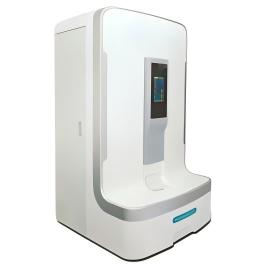
How MALDI-TOF Microbial Identification Works
The core principle of microbial mass spectrometry is the generation of a protein fingerprint from a bacterial or fungal colony. First, a small amount of a pure culture is spotted onto a target plate and overlaid with a matrix solution. A laser rapidly ionizes the sample, desorbing intact proteins. These ionized proteins travel through a flight tube under vacuum; the time they take to reach the detector (time-of-flight) corresponds directly to their mass-to-charge ratio. The resulting mass spectrum is compared against a reference database of known spectra, and a similarity score determines the identification at the species or genus level.
This process typically takes minutes from colony to result, compared with hours or days for traditional biochemical panels. According to the Manual of Clinical Microbiology (12th Edition), MALDI-TOF MS has become the standard routine identification method in many clinical laboratories due to its speed, accuracy, and low per-test cost.
| Method | Time to ID After Culture | Typical Accuracy | Labor Intensity |
|---|---|---|---|
| Traditional biochemical panels (tube or strip) | 4–24 hours | 85–95% (organism dependent) | Moderate to high |
| Automated biochemical systems | 4–12 hours | 90–98% | Low to moderate |
| MALDI-TOF MS | 1–5 minutes | 95–99% (common species) | Low |
Key Clinical Laboratory Use Cases
MALDI-TOF MS is used daily in clinical microbiology for identifying a broad range of organisms, including:
- Bacteria isolated from blood cultures, urine, respiratory specimens, wound swabs, and sterile body fluids.
- Yeast such as Candida species from positive blood cultures or primary specimens.
- Mycobacteria, though often requiring special sample preparation and database modules.
- Anaerobic bacteria that are slow and difficult to identify by biochemical methods.
- Rare or atypical pathogens where rapid identification can direct early targeted therapy.
The technology is particularly impactful in sepsis management. Rapid identification from a positive blood culture can reduce the time to appropriate antibiotic therapy, supporting antimicrobial stewardship programs. However, MALDI-TOF does not provide antimicrobial susceptibility data; that requires conventional susceptibility testing or genotypic resistance assays.
Turnaround Time Advantages
Time savings are one of the strongest drivers for adoption. Traditional biochemical identification may require overnight incubation, delaying a definitive result by 18–24 hours after a colony is available. MALDI-TOF MS delivers a species-level identification in minutes, allowing same-day reporting in many cases. This can shorten the window of empiric therapy, reduce length of stay, and improve patient outcomes in serious infections.
For laboratories handling high volumes, the cumulative time saved translates into faster batch release, reduced hands-on technician time, and more predictable workflow. In multi-site network evaluations, laboratories adopting MALDI-TOF often report a 1.0–1.5-day reduction in turnaround time for culture-positive samples.
Database and Identification Confidence
A robust reference database is critical for reliable results. Commercial MALDI-TOF platforms offer databases containing thousands of well-characterized spectra covering clinically relevant bacteria, mycobacteria, yeasts, and filamentous fungi. Laboratories should verify:
- Database coverage for the organisms most frequently encountered in their patient population.
- Update frequency and ease of adding custom entries for locally significant strains.
- Scoring criteria: high-confidence species-level identification vs. genus-level or “no identification” thresholds.
In general, a score above a vendor-determined cutoff indicates reliable species identification. Scores in an intermediate range may require additional confirmatory tests or repeat analysis from a pure subculture. Some closely related species, such as Shigella/E. coli or members of the Burkholderia cepacia complex, may not be reliably separated. Laboratories should understand these known database limitations and establish reflex testing protocols.
Quality Control Essentials
Like any analytical method, MALDI-TOF MS requires daily quality control and ongoing performance verification. A typical QC program includes:
- Running a known reference strain daily and confirming the expected identification with an acceptable score.
- Verifying mass accuracy using a calibration standard, usually provided by the instrument manufacturer.
- Regular cleaning of the target plate and ion source to prevent cross-contamination and signal degradation.
- Monitoring database integrity and software updates in accordance with the vendor’s instructions.
- Participating in external proficiency testing programs, as required by CLIA, CAP, or ISO 15189.
Common pitfalls include insufficient colony material, mixed cultures accidentally analyzed as pure, and inadequate matrix-analyte co-crystallization. Training should emphasize colony selection and sample preparation technique. According to the Clinical Microbiology Procedures Handbook (4th Edition), direct smearing of a single colony onto the target plate and immediate matrix application is sufficient for most routine isolates, but some organisms require an extraction step for optimal spectra.
Procurement and Evaluation Checklist
When evaluating a microbial mass spectrometry platform, clinical laboratories should align the purchase with clinical needs, workload, and long-term operational goals. Important factors to assess include:
- Throughput and capacity: How many identifications per day are required? Does the instrument support continuous loading?
- Database coverage: Does the standard database include the organisms commonly seen in your institution? Are specialized modules (mycobacteria, fungi) needed?
- LIS interfacing: Can the system connect to your laboratory information system for seamless result reporting?
- Regulatory status: Is the system FDA-cleared or CE-IVD marked for clinical use, or does it require in-house validation as a laboratory-developed test?
- Consumable costs: Calculate the per-test cost including target slides, matrix, calibrants, and controls. Consider volume-based discounts.
- Service and support: What are the service contract terms, response times, and availability of preventive maintenance?
- Training and validation: How much hands-on training and bench time is needed for technologists? What is the estimated onsite validation effort?
- Space and environmental requirements: Does the instrument require a dedicated vacuum pump, clean power, temperature control, or vibration isolation?
A systematic evaluation involving microbiology supervisors, laboratory administration, and IT personnel can help avoid common missteps, such as underestimating the need for a backup identification method when the MALDI-TOF is down.
When MALDI-TOF Is Not the Best Choice
Despite its advantages, microbial mass spectrometry is not a universal solution. Important limitations include:
- It requires visible colonies; direct specimen testing (e.g., positive blood culture broth without subculture) is possible with some workflows but often yields lower scores and higher “no identification” rates.
- It does not provide antimicrobial susceptibility information. Laboratories still need conventional AST or genotypic methods for resistance detection.
- It cannot identify viruses, parasites, or most fungi from direct clinical specimens without culture enrichment.
- Initial capital cost can be high for smaller facilities; a thorough cost-benefit analysis should consider test volume and alternative methods.
- For organisms with near-identical spectra, molecular methods such as 16S rRNA gene sequencing may still be required for definitive resolution.
In settings where throughput is low, or where the majority of isolates are easily identified with simple bench tests, the financial and operational justification may be more challenging. Laboratories should weigh the expected turnaround time gains against the cost of acquisition and maintenance.
Final Takeaway
MALDI-TOF microbial mass spectrometry offers clinical laboratories a faster, accurate, and cost-effective method for identifying bacteria and yeast. Its implementation can streamline laboratory workflow, support antimicrobial stewardship, and improve patient care through earlier targeted therapy. However, successful adoption depends on a realistic assessment of database performance, quality control practices, and integration into the existing laboratory information ecosystem. By using a structured procurement checklist and understanding where the technology fits—and where it doesn’t—clinical microbiology teams can make informed decisions that deliver lasting value.
For system-level planning, our Laboratory Equipment Solution page can help buyers connect equipment selection with real hospital or laboratory workflows. Related equipment pages include Microbial Mass Spectrometry Rapid Identification System and Automatic Microbial Biochemical Identification and Antimicrobial Susceptibility Analysis System.