
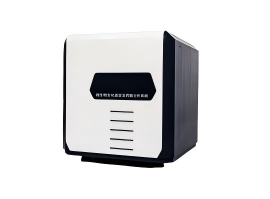
Automatic Microbial Biochemical Identification and Antimicrobial Susceptibility Analysis System
A laboratory product in the Microbial Identification System range for microbiology testing, sample preparation, pathogen detection or laboratory workflow support.
Request a QuoteProduct Introduction
The HD-MA200 Automatic Microbial Biochemical Identification and Antimicrobial Susceptibility Analysis System is an integrated laboratory system designed for microbial biochemical identification, antimicrobial susceptibility testing, MIC analysis, automatic interpretation, and report generation.
The system is suitable for testing samples from food, pharmaceuticals, clinical laboratories, animal husbandry, veterinary medicine, disease control, and public health monitoring. It helps laboratories achieve automated and standardized bacterial identification and quantitative antimicrobial susceptibility testing.
The HD-MA200 includes a microbial information database with more than 1,000 species, supports qualitative identification of more than 500 Gram-positive bacteria, Gram-negative bacteria, yeasts, and related microorganisms, and can perform quantitative sensitivity / MIC testing for more than 320 antibiotics.
It is suitable for foodborne pathogen identification required by GB 4789 series food safety standards, pathogenic bacteria identification required by the Chinese Pharmacopoeia, and pathogenic bacteria identification requirements for national pathogen identification networks.
Working Principle
The HD-MA200 identifies microorganisms by capturing biochemical phenotype characteristics through biochemical reactions.
During testing, microorganisms react with specific biochemical substrates in the detection panel. The system reads the reaction results automatically and uses matrix-based, probability-based, and other identification algorithms to determine the microorganism type.
For antimicrobial susceptibility testing, the system uses the micro-broth dilution method to determine MIC results. After bacterial suspension preparation and panel inoculation, the system automatically reads the test panel and interprets antimicrobial susceptibility results according to the database, expert rules, and relevant standard requirements.
This workflow supports microbial identification, MIC testing, resistance mechanism analysis, quality control, report output, and data statistics in one integrated system.
Main Applications
The HD-MA200 system can be used for microbial biochemical identification and antimicrobial susceptibility analysis in various laboratory fields.
Typical applications include:
- Foodborne pathogen identification
- Pharmaceutical microbiology testing
- Clinical microbial identification
- Veterinary microbiology testing
- Animal husbandry disease monitoring
- Antimicrobial susceptibility testing
- MIC testing
- Food safety testing according to GB 4789 series requirements
- Pathogenic bacteria identification according to Chinese Pharmacopoeia requirements
- National pathogen identification network testing
- Antimicrobial resistance monitoring
- Research and teaching laboratories
The system is suitable for laboratories that need standardized microbial identification, antimicrobial susceptibility analysis, resistance trend monitoring, and report traceability.
Technical Specifications
| Item | Specification |
|---|---|
| Product Name | Automatic Microbial Biochemical Identification and Antimicrobial Susceptibility Analysis System |
| Model | HD-MA200 |
| Main Function | Microbial biochemical identification, antimicrobial susceptibility testing, MIC analysis, automatic interpretation, and report generation |
| Microbial Information Database | More than 1,000 species |
| Qualitative Identification Coverage | More than 500 Gram-positive bacteria, Gram-negative bacteria, yeasts, and related microorganisms |
| Antimicrobial Susceptibility Coverage | Quantitative sensitivity / MIC testing for more than 320 antibiotics |
| Identification Principle | Biochemical phenotype recognition with matrix and probability-based algorithms |
| AST Principle | Micro-broth dilution method |
| Biochemical Identification Agreement | ≥95% |
| Antimicrobial Susceptibility Agreement | ≥95% |
| Repeatability Error | ≤1% |
| Automatic Reading Speed | ≤9 seconds per plate |
| Result Time | Identification / AST results in 18–24 hours |
| Fast-Growing Bacteria Result Time | Identification results in 4–8 hours for some fast-growing bacteria |
| Detection Plate Compatibility | 120-well identification and AST panels, 96-well AST panels |
| Anaerobic Monitoring | Wireless oxygen concentration monitoring with temperature and humidity monitoring |
| Standard Compatibility | CLSI, WHONET, CARSS and related requirements |
| Quality Control | Instrument self-calibration QC and reagent QC |
| Data Query | 12 one-click daily statistics and more than 100 customized statistics |
| Expert System | 262 intrinsic resistance records and 264 expert rules |
| Resistance Mechanism Analysis | Built-in 42 resistance mechanism phenotype interpretations |
| MDR/XDR/PDR Analysis | Automatic resistance attribute judgment for key bacteria |
| Customized AST Panels | 96-well customized AST panels |
| Customized Panel Supply Time | Other customized panels supplied within ≤20 days |
| Operating System | Supports both instrument host display operation and computer workstation operation |
| Automatic Pipetting Range | 50–200 μL |
| Pipetting Accuracy Error | ≤±2% |
| Pipetting Repeatability Error | ≤1% |
| Pipetting Time | ≤40 seconds / 96-well plate; ≤50 seconds / 120-well plate |
| Pipetting Modes | 7 built-in pipetting modes and custom modes |
| Operating Temperature | 10–40°C |
| Relative Humidity | ≤85% |
| Atmospheric Pressure | 80–105 kPa |
| Power Supply | AC 220V ±22V, 50Hz ±1Hz |
System Functions
Microbial Biochemical Identification
The system uses biochemical reaction results to capture the phenotype characteristics of bacteria and yeasts. Through matrix and probability-based identification algorithms, it automatically determines the microbial species and outputs identification results.
Antimicrobial Susceptibility Testing
The HD-MA200 uses the micro-broth dilution method to interpret MIC results. It can quantitatively test the sensitivity of more than 320 antibiotics and generate antimicrobial susceptibility reports.
Automatic Panel Reading
The automatic microbial reader can complete plate interpretation in ≤9 seconds per plate, helping laboratories improve testing efficiency and reduce manual interpretation differences.
120-Well and 96-Well Panel Compatibility
The system is compatible with both 120-well identification and antimicrobial susceptibility testing panels and 96-well antimicrobial susceptibility testing panels. This allows laboratories to choose different panel formats according to workflow requirements.
Anaerobic Culture Monitoring
The system supports wireless oxygen concentration monitoring. It can monitor oxygen concentration changes during culture in real time and can also monitor temperature and humidity.
Monitoring information can be automatically generated into charts for result analysis and can also be stored and exported for laboratory documentation.
Standardized Data Traceability
The system data can correspond to CLSI, WHONET, CARSS, and other standard requirements. Each test retains the original image of the detection panel, and each result includes the standard version number used for interpretation.
Quality Control Module
The system includes instrument self-calibration quality control and reagent quality control functions. When generating and printing quality control reports, a C control is designed to help reduce errors caused by visual interpretation.
Data Query and Statistical Analysis
The software provides 12 one-click daily statistical functions and more than 100 customized statistical functions, making it convenient for users to query laboratory data, result trends, resistance information, and test records.
Expert System
The HD-MA200 includes 262 intrinsic resistance records and 264 expert rules. The expert system can support shielding deduction, correction, counter-evidence analysis, behavior reminders, and warning prompts.
Resistance Mechanism Analysis
The system has built-in phenotype interpretation for 42 resistance mechanisms. Based on phenotype results, it can prompt users to perform the next confirmation test when needed.
Antimicrobial Resistance Monitoring
For key bacteria of public health concern, the system can automatically determine and prompt multidrug resistance attributes, including:
- MDR: Multidrug-resistant
- XDR: Extensively drug-resistant
- PDR: Pan-drug-resistant
Target organisms include Enterobacteriaceae, Staphylococcus, Enterococcus, Pseudomonas aeruginosa, and Acinetobacter baumannii.
Customized Antimicrobial Susceptibility Panels
The system supports 96-well customized antimicrobial susceptibility panels. Customized panels can meet CHINA PIN antimicrobial susceptibility analysis standards, and special panels are available for aquatic and veterinary applications.
Other customized panels can be supplied within ≤20 days according to laboratory requirements.
Detection Reagents and Panels
Composite Identification and AST Panels
The system can provide 8 types of composite identification and antimicrobial susceptibility panels, including full-gradient MIC antimicrobial susceptibility panels.
120-Well Panel Strips
The system supports 120-well panel strips, which can be used for both microbial identification and antimicrobial susceptibility testing.
96-Well Customized AST Panels
The system can provide 96-well customized antimicrobial susceptibility panels. Drug concentration and plate layout can be customized according to testing requirements.
Customized panels can be designed for:
- Food safety testing
- Clinical microbiology
- Pharmaceutical microbiology
- Veterinary testing
- Aquatic product testing
- Antimicrobial resistance monitoring
- National pathogen identification network requirements
Automatic Pipetting System
The HD-MA200 includes a fully automatic pipetting instrument to improve sample loading efficiency and reduce manual operation errors.
Pipetting Principle
The pipetting system uses a quantitative aspiration principle to achieve accurate sample loading without manual aspiration.
Pipetting Range
The automatic pipetting range is 50–200 μL.
Pipetting Accuracy
The pipetting accuracy error is ≤±2%, and the repeatability error is ≤1%.
Pipetting Speed
The system can complete pipetting within:
- ≤40 seconds per 96-well plate
- ≤50 seconds per 120-well plate
Pipetting Modes
The system includes 7 built-in pipetting modes and also supports custom modes for flexible sample loading.
Microplate Compatibility
Through custom settings, the pipetting system can be compatible with microplates with different well positions and layouts.
Hardware Configuration
The HD-MA200 system includes the following hardware components:
Fully Automatic Microbial Reader
The automatic microbial reader accurately reads test panels, interprets results, and generates standard reports.
McFarland Turbidimeter
The McFarland turbidimeter is used to prepare standardized bacterial suspensions before testing, helping improve test consistency.
Fully Automatic Pipetting Instrument
The automatic pipetting instrument automatically loads samples, reducing errors caused by manual operation, improving efficiency, and reducing labor workload.
Computer Workstation
The computer workstation includes the detection system and can be configured according to customer requirements. It supports data management, result interpretation, statistics, report generation, and system operation.
Standard Configuration
The standard system configuration includes:
| Item | Quantity |
|---|---|
| Fully Automatic Microbial Reader | 1 unit |
| McFarland Turbidimeter | 1 unit |
| Fully Automatic Pipetting Instrument | 1 unit |
| Computer Workstation with Detection System | 1 set |
| Standard Reagents | 1 box |
Detection Workflow
A typical HD-MA200 workflow includes:
- Prepare microbial sample
- Use the McFarland turbidimeter to prepare standardized bacterial suspension
- Select the required identification / AST panel
- Use the automatic pipetting instrument to load the sample
- Incubate the panel according to the testing procedure
- Load the panel into the automatic microbial reader
- The system reads biochemical and antimicrobial susceptibility reactions
- Software performs microbial identification and MIC interpretation
- Expert rules and resistance mechanisms are analyzed
- Quality control and standard traceability information are recorded
- A standard identification and antimicrobial susceptibility report is generated
- Data can be queried, exported, statistically analyzed, or uploaded as required
This integrated workflow helps laboratories reduce manual operations and improve the standardization of microbial testing.
Applicable Laboratories and Institutions
The HD-MA200 is suitable for:
- Food safety testing laboratories
- Pharmaceutical microbiology laboratories
- Clinical microbiology laboratories
- Hospital laboratory departments
- Disease control centers
- Animal husbandry laboratories
- Veterinary testing institutions
- Aquatic product testing laboratories
- Public health laboratories
- Third-party testing laboratories
- Research institutes
- Universities and teaching laboratories
- National pathogen identification network laboratories
Product Advantages
Integrated Identification and AST
The system supports both microbial biochemical identification and antimicrobial susceptibility testing, helping laboratories complete identification and MIC analysis in one workflow.
Large Database Coverage
The microbial information database includes more than 1,000 species, supports qualitative identification of more than 500 microorganisms, and supports MIC testing for more than 320 antibiotics.
High Result Agreement
Biochemical identification agreement and antimicrobial susceptibility result agreement are both ≥95%, supporting stable laboratory testing performance.
Fast Automatic Reading
Automatic plate reading speed is ≤9 seconds per plate, improving routine testing throughput.
Flexible Panel Compatibility
The system supports 120-well identification and AST panels as well as 96-well AST panels, allowing laboratories to choose suitable testing formats.
Automatic Pipetting
The fully automatic pipetting instrument reduces manual sample loading errors and improves laboratory efficiency.
Strong Expert Rule System
With intrinsic resistance records, expert rules, resistance mechanism interpretation, and warning prompts, the system helps improve result interpretation quality.
Antimicrobial Resistance Monitoring
The system can automatically identify MDR, XDR, and PDR attributes for key bacteria, supporting antimicrobial resistance monitoring and public health analysis.
Standard Traceability
Each result includes the standard version number used for interpretation, and each test retains the original panel photo for traceability.
Customizable AST Panels
Customized 96-well AST panels are available for food safety, veterinary, aquatic, clinical, and other specialized applications.
Installation Requirements
The system should be installed in a clean, dry, and stable laboratory environment. The laboratory should provide suitable bench space for the microbial reader, McFarland turbidimeter, automatic pipetting instrument, computer workstation, reagents, and panels.
The working environment should meet the following conditions:
- Environmental temperature: 10–40°C
- Relative humidity: ≤85%
- Atmospheric pressure: 80–105 kPa
- Power supply: AC 220V ±22V, 50Hz ±1Hz
Professional installation, software setup, reagent configuration, and operator training are recommended to ensure stable use.
Maintenance Requirements
Routine maintenance includes cleaning the microbial reader, checking panel loading status, verifying the McFarland turbidimeter, maintaining the automatic pipetting instrument, managing reagents and panels, backing up software data, and updating standards or databases when required.
For the automatic pipetting instrument, users should regularly check pipetting channels, tips, liquid pathways, and sample loading accuracy.
Laboratories should also perform quality control testing according to internal management requirements to maintain result reliability.
Packaging and Export
The HD-MA200 system can be packed with protective materials to ensure safe transportation of the microbial reader, McFarland turbidimeter, automatic pipetting instrument, computer workstation, reagents, panels, and accessories.
For export projects, configuration guidance, technical documents, operation manuals, software support, installation training, and after-sales service can be provided according to customer requirements.
Customization Service
The HD-MA200 can be configured according to different laboratory requirements, sample types, antimicrobial monitoring programs, and workflow needs.
Customization options may include:
- 96-well customized AST panels
- Customized antimicrobial concentrations
- Customized antimicrobial layout
- Aquatic AST panels
- Veterinary AST panels
- Food safety monitoring panels
- Data statistics and report format configuration
- Data upload configuration
- Automatic pipetting workflow customization
- Computer workstation configuration
Product appearance, structure, performance, software functions, and technical parameters may change due to continuous product improvement. Final configuration should be confirmed according to the latest product information.
Related Equipment and Applications
The HD-MA200 can be used as part of a complete microbial identification and antimicrobial susceptibility testing solution. Related equipment and applications include:
- Automatic microbial identification system
- Biochemical identification system
- Antimicrobial susceptibility testing system
- MIC testing system
- Automatic microbial reader
- McFarland turbidimeter
- Automatic pipetting system
- 120-well identification and AST panel
- 96-well AST panel
- Foodborne pathogen identification system
- Veterinary antimicrobial susceptibility testing
- Clinical microbiology AST analysis
- Antimicrobial resistance monitoring system
- Micro-broth dilution testing system
FAQ
1. What is the HD-MA300 used for?
The HD-MA200 is used for automatic microbial biochemical identification, antimicrobial susceptibility testing, MIC analysis, resistance mechanism interpretation, and report generation.
2. What microorganisms can the system identify?
The system can qualitatively identify more than 500 microorganisms, including Gram-positive bacteria, Gram-negative bacteria, yeasts, and related microorganisms.
3. How many antibiotics can the system test?
The system can perform quantitative sensitivity / MIC testing for more than 320 antibiotics.
4. What detection principle does the system use?
Microbial identification is based on biochemical reaction phenotype analysis with matrix and probability-based algorithms. Antimicrobial susceptibility testing uses the micro-broth dilution method.
5. How fast does the system read a panel?
The automatic reading speed is ≤9 seconds per plate.
6. When can results be obtained?
Most identification and antimicrobial susceptibility results can be obtained within 18–24 hours. Some fast-growing bacteria can complete identification within 4–8 hours.
7. What panel formats does the system support?
The system supports both 120-well identification and AST panels and 96-well antimicrobial susceptibility panels.
8. Does the system support automatic pipetting?
Yes. The system includes a fully automatic pipetting instrument with a pipetting range of 50–200 μL.
9. Can the system monitor anaerobic culture conditions?
Yes. The system supports wireless oxygen concentration monitoring and can also monitor temperature and humidity.
10. Does the system support resistance mechanism analysis?
Yes. It includes 42 resistance mechanism phenotype interpretations and can prompt users for further confirmation testing when needed.
11. Can the system identify MDR, XDR, and PDR?
Yes. It can automatically identify multidrug resistance attributes such as MDR, XDR, and PDR for key bacteria.
12. Can customized antimicrobial susceptibility panels be supplied?
Yes. The system supports 96-well customized AST panels, including aquatic and veterinary panels. Other customized panels can be supplied within ≤20 days.