
Colony Counter Buying Guide: Key Features for Routine Microbiology Labs
What Is a Colony Counter and Where It Fits in the Lab
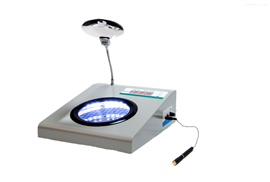
A colony counter is a device used to enumerate bacterial or fungal colonies on agar plates. It replaces the labor-intensive manual marking and tallying often done with a pen and a handheld clicker. In routine microbiology labs, colony counters are used for standard plate counts, total viable counts, antimicrobial efficacy tests, and other applications where reliable enumeration is required. While some labs still use simple lighted magnifiers with manual counting grids, many routine workflows now benefit from automatic digital colony counters that capture images and apply algorithms to distinguish and count colonies.
Manual vs Automatic Colony Counters
The core decision is between manual and automatic counting. Both have their place, depending on sample volume, accuracy requirements, and budget. The following comparison outlines typical differences.
| Factor | Manual Colony Counter | Automatic Colony Counter |
|---|---|---|
| Counting method | Operator marks each colony with a pen or probe; a digital tally increments | Camera captures the plate image and software counts colonies based on size, shape, and contrast |
| Typical throughput | Low to moderate; each plate requires operator attention | High; plates can be loaded and counted quickly with minimal supervision |
| Initial cost | Lower | Higher |
| Operator variability | Higher; different technicians may have slight differences in visual interpretation | Lower; consistent algorithm reduces person-to-person variation |
| Plate types | Works with any standard Petri dish; can handle non-standard containers with adapters | Designed for standard plate sizes (typically 90–100 mm) but may struggle with non-standard or very dense plates without good segmentation |
| Data handling | Results must be manually recorded or transferred to a computer | Automatic data export to LIMS or spreadsheets; images stored for traceability |
| Best for | Small labs, teaching labs, occasional counting, low budgets | High-volume routine testing, regulatory environments, labs that need image-based records |
This table is not about one being “better” but about matching the tool to your lab’s workload and quality requirements.
Key Features to Evaluate When Comparing Colony Counters
Below the manual/automatic split, several features directly affect day-to-day performance. Use the following checklist when reviewing specifications.
Lighting and Image Quality
Even lighting is critical for accurate colony discrimination. Look for adjustable top and bottom illumination, and for automatic counters, a camera system that captures high-resolution images without glare. Transmitted light helps with translucent colonies, while reflected light works better for opaque ones. If your lab works with a variety of media (e.g., blood agar, chromogenic agars), adjustable color temperature or multi‐spectral lighting can improve contrast.
Magnification and Lens Systems
For manual counters, a 1.5–2× magnifying lens is common. Automatic counters often use digital zoom. The key is being able to distinguish small colonies (down to 0.1 mm or less) and differentiate touching colonies. Some automatic systems include a macro lens or high-megapixel sensor for detailed imaging.
Software and Counting Algorithms
Automatic colony counters rely on software to separate and count colonies. Compare parameters like minimum colony size detection, separation of merged colonies, and ability to count spiral‐plated or spread‐plate patterns. Good software allows the user to review and manually correct counts on-screen. It should also handle different counting modes (total count, differential count based on color or size) and export data in a format compatible with your lab information system.
Plate Formats and Accessories
Confirm that the counter accepts the plate diameters and types you use routinely. Most counters are built for standard 90–100 mm Petri dishes, but some labs also use 60 mm or 150 mm plates, contact plates, or membrane filters. Automatic counters may have interchangeable plate holders or adapters. If you perform spiral plating, ensure the software can handle sector-based counting.
Counting Accuracy and Repeatability: What Matters for Routine Work
Accuracy is not just about machine specifications; it also depends on how the counter handles real-world plates. According to the Clinical Microbiology Procedures Handbook (ASM Press), accurate colony counting is essential for standard plate counts and laboratory quality control. In routine labs, repeatability (how consistently the same plate yields the same count) often matters more than an absolute “true” count, especially when tracking trends.
When evaluating any colony counter, test it with your typical samples—dense plates, plates with spreading colonies, and plates with mixed colony morphologies. For automatic counters, check that the software correctly isolates overlapping colonies and does not count artifacts (like bubbles or media imperfections). A useful feature is a visual overlay that shows which colonies were counted, allowing the operator to verify and edit.
Routine Microbiology Applications and Workflow Considerations
Colony counters are used in a range of routine applications:
- Water testing (heterotrophic plate counts, total coliforms)
- Food and beverage microbiology (aerobic plate counts, yeast/mold counts)
- Pharmaceutical environmental monitoring (settle plates, contact plates)
- Cosmetic and personal care product testing
- Clinical microbiology (urine cultures, wound swabs)
Each application may have different counting requirements. For example, water testing often follows standard methods (like US EPA or ISO) that specify acceptable counting ranges. Food labs may need to count plates with a wide range of colony sizes. Integration into the lab workflow is another practical concern: an automatic counter that saves images and exports data can reduce transcription errors and speed up reporting, but it also introduces a learning curve and IT setup.
Common Mistakes When Choosing a Colony Counter
Labs sometimes focus on the number of features rather than how they fit actual daily tasks. Avoid these mistakes:
- Choosing an automatic counter without testing it on your most challenging plates (e.g., very dense or moldy plates).
- Overlooking the time needed for software setup, validation, and staff training.
- Assuming all automatic counters are “plug and play” with existing LIMS or data systems.
- Ignoring the need for manual correction steps; even the best algorithms may mis-segment colonies in a real-world plate.
- Underestimating the value of image storage and retrieval for audits or troubleshooting.
- Choosing a counter that cannot accommodate all the plate sizes and types your lab handles.
Making a Confident Selection for Your Lab
There is no single best colony counter for every routine microbiology lab. The right choice depends on your sample volume, plate types, required accuracy, and data management demands. Start by clearly defining what “routine” means in your facility: is it 10 plates a day or 200? Do you need to count only total viable colonies, or do you also need to differentiate by color or size? Are you bound by quality regulations that require full traceability? Use this guide as a checklist to compare options, and whenever possible, test a counter with your own samples before committing. A well-chosen colony counter will save time, reduce human error, and make your lab’s counting data more reliable.
For system-level planning, our Laboratory Equipment Solution page can help buyers connect equipment selection with real hospital or laboratory workflows. Related equipment pages include Fully Automatic Colony Counter and Biomedical Equipment Product Catalog.