
How to Choose a Fully Automatic Colony Counter for Microbiology Testing
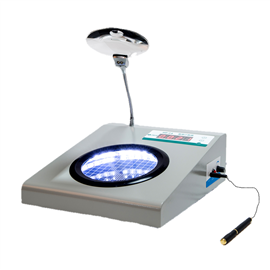
Why Switch to Fully Automatic Colony Counters?
Manual colony counting is time-consuming and prone to operator fatigue. Automatic colony counters use digital imaging and algorithms to detect, count, and classify colonies consistently. They can handle high volumes, generate electronic records, and integrate with LIMS for traceability. For labs dealing with repetitive counting or large sample batches, an automatic colony counter is often a worthwhile investment.
Key Factors to Compare Before Choosing an Automatic Colony Counter
Colony Counting Accuracy and Algorithm Reliability
Accuracy is the most critical specification. Look for counters that can distinguish overlapping colonies, separate touching colonies, and ignore debris or scratches. Test reports or user references should demonstrate performance on mixed plate types. The algorithm should be validated for the microorganism species and media you commonly use. Some systems allow user-adjustable sensitivity or machine learning training for custom colony morphologies.
Imaging and Lighting Control
The imaging system—camera resolution, lens, and lighting—determines how well colonies are captured. Uniform, adjustable illumination (top, bottom, or both) reduces shadows and glare on Petri dishes. Look for automatic calibration and the ability to handle clear or opaque media without manual adjustments each time. High-resolution cameras capture small colonies; dark-field options can improve contrast for translucent colonies.
Software and Reporting Features
Beyond counting, software delivers value: size measurement, color differentiation, zone-of-inhibition analysis, and antibiotic resistance classification. Check if the software can export data in formats compatible with your lab information system. Features like automated report generation, audit trail, and user-level access controls support regulatory compliance (e.g., ISO, FDA). Evaluate if the interface is intuitive; overly complex software can slow adoption.
Plate Compatibility and Throughput
Consider the types of plates you use: standard 90 mm, 150 mm, contact plates, spiral plates, or petri films. Not all counters support every format. Throughput is measured in plates per hour and varies based on whether the system uses manual loading or a robotic feeder. Estimate daily volume: a low-throughput lab may suffice with a single-plate manual placement, while a high-volume QC lab may need a stack feeder and continuous operation.
Maintenance and Long-Term Reliability
Automatic colony counters require minimal hardware maintenance but regular cleaning of optics and calibration checks. Enquire about service availability, warranty, and software update policies. Some systems have sealed optical paths to reduce dust; others may need periodic bulb replacement. Look for a robust build that withstands frequent use.
Entry-Level vs Advanced Automatic Colony Counters
A simple comparison table can help clarify the trade-offs.
| Feature | Entry-Level | Advanced |
|---|---|---|
| Throughput | Manual, ~30–60 plates/hour | Automated feeding, 200+ plates/hour |
| Colony Separation | Basic touching separation | AI-based separation & classification |
| Lighting | Single LED ring, basic contrast | Multi-directional, dark-field, automatic adjustment |
| Software | Simple count and report | Full LIMS integration, advanced analytics, 21 CFR Part 11 capable |
| Plate Formats | Standard 90 mm only | Multiple sizes, contact plates, films |
| Maintenance | User cleaning, basic support | Remote diagnostics, service contracts |
Common Pitfalls When Selecting a Colony Counter
- Overlooking plate size requirements: not all counters handle 150 mm plates or irregular surfaces.
- Assuming all automatic colony counters provide equal accuracy with molds or swarming organisms.
- Ignoring software compatibility with existing lab data systems.
- Choosing based solely on speed without verifying accuracy on real samples.
- Failing to budget for periodic calibration and validation materials.
Final Takeaway
Choosing a fully automatic colony counter involves matching the system’s imaging, software, and throughput capabilities to your lab’s testing scope. Start by auditing your typical plate types, volume, and reporting needs. Then compare systems not by price alone but by validated performance on your own samples. A well-chosen colony counter pays off in consistent results, faster turnaround, and audit-ready documentation.
For system-level planning, our Laboratory Equipment Solution page can help buyers connect equipment selection with real hospital or laboratory workflows. Related equipment pages include Fully Automatic Colony Counter and Fully Automatic Bacterial Suspension Inoculation and Antimicrobial Susceptibility Interpretation System.