
Automatic Bacterial Platers: Improving Consistency in Susceptibility Testing
What Is an Automatic Bacterial Plater?
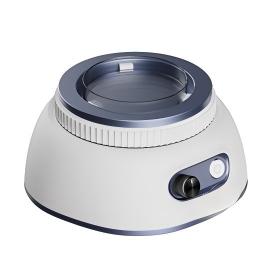
An automatic bacterial plater is a laboratory instrument designed to evenly distribute a bacterial inoculum across the surface of an agar plate. It typically uses a rotating platform and a sterile spreading tool—such as a glass or metal spreader, or a disposable loop—to mechanically spread the suspension in a controlled pattern. The device replaces the manual hockey-stick or loop method, which can vary from person to person and from plate to plate.
Automatic platers can handle standard Petri dishes (90–100 mm) and sometimes larger formats. They are commonly used in clinical microbiology, pharmaceutical quality control, food testing, and research settings where consistent plate inoculation is essential for downstream testing.
How Automatic Platers Improve Plate Coating Consistency
Consistent plate coating is the foundation of reliable AST results. Manual spreading often leads to uneven distribution: some areas may be too heavy, creating confluent growth that obscures zones, while other areas may be too light, causing weak growth and inaccurate zone edges. An automatic bacterial plater applies a repeatable spreading protocol, ensuring that every plate receives the same inoculum volume, rotation speed, and spreading pressure.
Key consistency benefits include:
- Uniform bacterial lawn: Even growth across the plate supports precise zone diameter measurements.
- Reduced edge effects: Proper spreading minimizes the pooling of inoculum near the plate rim.
- Elimination of operator bias: The machine does not tire or vary its technique over long runs.
According to the Clinical Microbiology Procedures Handbook (4th Edition, Chapter 5.2), the quality of the bacterial lawn directly affects the accuracy of disk diffusion tests, making standardized inoculation a critical quality control step.
The Role of Bacterial Platers in AST Preparation
For disk diffusion (Kirby-Bauer) and gradient diffusion (Etest) methods, the bacterial inoculum must be spread to create a semi-confluent lawn. The Clinical and Laboratory Standards Institute (CLSI) M02 document specifies that the inoculum should be applied to achieve a lawn that is almost but not completely confluent after incubation. An automatic plater helps labs meet this standard by delivering consistent spreading action that is difficult to achieve manually across large batches.
In broth microdilution AST, the plater is not used directly, but the preparation of inoculum suspensions with a precise turbidity (0.5 McFarland) and their uniform distribution onto agar plates for purity checks or colony counts can also benefit from automation.
Labor Reduction and Workflow Efficiency
Laboratory staff often spend considerable time manually plating dozens or hundreds of samples daily. An automatic bacterial plater can cut this hands-on time significantly. Once the device is loaded with pre-poured agar plates and the inoculum suspension is prepared, the machine can process a stack of plates with minimal intervention.
Table 1: Manual vs. Automatic Plating Workflow
| Factor | Manual Plating | Automatic Plater |
|---|---|---|
| Time per plate | 15–30 seconds | 5–10 seconds (hands-on) |
| Operator focus required | Continuous for each plate | Minimal after loading |
| Risk of repetitive strain injury | Moderate to high | Eliminated |
| Throughput per hour | 120–240 plates | 300–500 plates |
| Standardization | Operator-dependent | Programmable protocols |
This time saving allows technologists to focus on more complex tasks such as reading zones, identifying organisms, or troubleshooting unusual results.
Key Factors for Repeatability and Reproducibility
Repeatability (within-run precision) and reproducibility (between-run, between-operator, or between-laboratory agreement) are essential for AST accuracy. An automatic bacterial plater contributes to both by removing variable human technique. However, the instrument itself must be properly calibrated and maintained.
Factors that influence repeatability and reproducibility include:
- Inoculum standardization: The device works best with a correctly adjusted suspension (0.5 McFarland).
- Spreader design: The material, shape, and sterilization method of the spreading tool affect consistency.
- Plate type: Variations in agar depth or surface moisture can alter spreading patterns.
- Cleaning protocol: Residual bacteria or disinfectant can contaminate subsequent plates.
What Labs Should Check When Buying a Bacterial Plater
When evaluating an automatic bacterial plater for a clinical or research laboratory, several practical criteria should be considered:
- Compatibility with existing consumables: Ensure the plater accepts the plate brand and size your lab uses.
- Spread pattern adjustability: Some instruments offer multiple spreading patterns (e.g., spiral, back-and-forth) for different applications.
- Throughput capacity: Consider the maximum number of plates that can be processed in one run and whether stacking or manual loading is required.
- Sterilization method: Check if the spreader is heat-sterilized, UV-treated, or uses disposable heads to prevent cross-contamination.
- Footprint and ergonomics: The instrument should fit comfortably on a lab bench and integrate into the workflow without creating bottlenecks.
- Ease of validation: Look for models that can be validated using standardized inoculum and control strains per CLSI or EUCAST guidelines.
- Service and support: Reliable technical support and availability of replacement parts are critical for minimizing downtime.
Common Mistakes to Avoid with Automatic Platers
Even with automation, errors can occur if the system is not used properly. Common pitfalls include:
- Using an incorrect inoculum turbidity, leading to overly heavy or light growth.
- Failing to allow plates to dry before spreading, which can cause uneven absorption.
- Not verifying that the spreader is actually contacting the agar surface evenly.
- Skipping regular calibration or maintenance, which can degrade performance over time.
- Assuming that automation eliminates the need for quality control checks—periodic manual verification is still recommended.
When an Automatic Plater May Not Be the Right Choice
An automatic bacterial plater is a valuable tool for high-volume labs, but it is not necessary for every facility. Labs that process fewer than 20 AST plates per day may find that manual plating remains cost-effective and sufficiently reproducible if strict SOPs are followed. Additionally, labs that use only broth-based AST methods (e.g., automated ID/AST systems that require a different inoculum preparation) may not benefit from a dedicated plate spreader.
In such cases, investing in better inoculum standardization devices (like nephelometers or photometric devices) may have a greater impact on AST quality.
Final Takeaway
An automatic bacterial plater can significantly improve the consistency and efficiency of plate-based susceptibility testing. By standardizing the spreading process, it reduces variability, saves labor, and helps labs meet CLSI and EUCAST quality recommendations. When considering a purchase, focus on compatibility, throughput, sterilization methods, and ease of validation. Remember that automation complements but does not replace good laboratory practices: proper inoculum preparation, plate handling, and quality control remain essential.
For system-level planning, our Laboratory Equipment Solution page can help buyers connect equipment selection with real hospital or laboratory workflows. Related equipment pages include Automatic Microbial Biochemical Identification and Antimicrobial Susceptibility Analysis System and Fully Automatic Bacterial Suspension Inoculation and Antimicrobial Susceptibility Interpretation System.