
Paddle Blender Homogenizers for Microbial Sample Preparation: Applications and Benefits
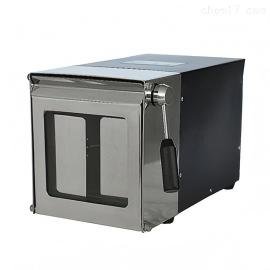
What Is a Paddle Blender Homogenizer and How Does It Work?
A paddle blender homogenizer is a laboratory instrument designed to prepare homogeneous microbial suspensions from a variety of sample types. It operates by placing the sample and a sterile diluent inside a sterile, disposable plastic bag, which is then inserted into the instrument. Motor-driven paddles press and knead the bag from the outside, breaking apart the sample and mixing it with the diluent. Because the sample never touches the paddles or the blending chamber, cross-contamination between samples is eliminated. This closed-bag approach is fundamental to reliable microbial enumeration, pathogen detection, and quality control workflows.
- Sample integrity: The bag is the only contact surface; no cleaning or autoclaving of blending parts is needed between samples.
- Adjustable parameters: Blending time, paddle speed, and pressure can be adjusted to suit different sample types.
- Temperature control: Some models include cooling features to prevent heat damage to microorganisms during blending.
According to the Compendium of Methods for the Microbiological Examination of Foods, proper homogenization is critical for accurate colony counts and for the recovery of stressed or sublethally injured cells. Paddle blenders meet this need by delivering gentle yet effective mixing that preserves microbial viability.
Key Applications of Paddle Blender Homogenizers in Microbial Testing
Paddle blenders are used wherever solid or semi-solid samples must be processed for microbiological analysis. Common applications include:
- Food microbiology: Preparation of food homogenates for total plate counts, pathogen detection (Salmonella, Listeria, E. coli O157:H7), and indicator organism enumeration. Suitable for raw meats, dairy products, fresh produce, dry ingredients, and more.
- Environmental monitoring: Processing of sponge samples, swabs, or soil and water sediments for microbial assessment.
- Pharmaceutical quality control: Homogenization of creams, ointments, powders, and solid dosage forms for bioburden testing.
- Clinical and veterinary diagnostics: Preparation of tissue, fecal, or feed samples for microbial culture or molecular detection.
- Cosmetic product testing: Ensuring homogeneous suspensions for preservative efficacy testing and microbial limits.
Sterility and Contamination Control: Why Bag-Based Homogenization Matters
The sterile bag is the centerpiece of contamination control. Since the sample is sealed inside a disposable bag, the paddle blender eliminates the need for blender jars, probes, or knives that require autoclaving between runs. This drastically reduces the risk of carryover contamination and saves valuable technician time.
- Pre-sterilized bags: Bags are typically gamma-irradiated and free of DNase, RNase, and pyrogens.
- Filter bags: Some bags have integrated lateral filters that allow pipetting of the liquid phase without particulate interference, reducing membrane clogging during filtration.
- Aseptic technique: Sample introduction and bag sealing can be performed under laminar flow hoods or with heat-sealing devices to maintain sterility.
The U.S. Food and Drug Administration’s Bacteriological Analytical Manual (BAM) recommends the use of stomacher-type homogenizers for many food protocols, a clear acknowledgment of their role in contamination control.
Mixing Performance: How Paddle Blending Ensures Reliable Sample Prep
Mixing performance directly affects the accuracy of downstream quantitative analyses. Paddle blenders provide reproducible homogenization by combining compression and shearing forces without high-speed blades that can overheat or damage cells.
| Performance Factor | Why It Matters |
|---|---|
| Paddle pressure and speed | Insufficient blending leaves clumps, while excessive force may injure bacteria and reduce recovery. Adjustable settings let the user match the sample type. |
| Blending time | Typical times of 30–120 seconds are enough for most foods. Over-blending can cause frothing or release inhibitory compounds. |
| Bag fill volume | Overfilling reduces mixing efficiency. Most bags are rated for 400 ml total volume (sample plus diluent). |
| Sample consistency | Fibrous, fatty, or hard samples may need longer times or specialized bags with internal strainers. |
Consistent mixing across samples is particularly important in reference method validations and inter-laboratory studies, where reproducibility is a key metric.
Bag Compatibility and Sample Integrity
Paddle blenders rely on the quality and compatibility of the homogenizer bag. Selecting the correct bag type ensures proper blending and prevents leakage.
- Standard blender bags: Clear polyethylene bags for general use, available in various sizes.
- Filter bags: Have a full-length or lateral filter membrane that retains solids while allowing free-flowing liquid to pass through, ideal for pipetting or membrane filtration.
- Heavy-duty bags: Thicker construction for hard or sharp samples such as bones, shells, or dry pellets.
- Temperature-resistant bags: For samples that need to be blended at cold temperatures or stored frozen.
- Sample size considerations: Bags typically range from 80 ml to 3500 ml capacity. Overfilling leads to incomplete homogenization and potential leakage.
Using bags not designed for the specific paddle blender model can cause poor paddle engagement or bag rupture. Always verify bag dimensions and material compatibility with the instrument manufacturer’s specifications.
Comparison: Paddle Blender vs. Rotor-Stator Homogenizer for Microbial Samples
Both devices prepare homogenates, but they differ fundamentally in design, contamination risk, and suitability for microbial work.
| Feature | Paddle Blender Homogenizer | Rotor-Stator Homogenizer |
|---|---|---|
| Contamination control | Excellent; sample sealed in disposable bag, no cross-contamination | Requires thorough cleaning and autoclaving of probe between samples |
| Processing time | Typically 30–120 seconds per sample | Usually faster but with more heat generation |
| Sample temperature rise | Minimal, especially with cooling options | Can rise quickly, potentially damaging microorganisms |
| Labor intensity | Low; minimal cleaning | Higher; requires disassembly, cleaning, sterilization |
| Sample throughput | Good for batch processing; quick bag changeover | Limited by cleaning and cool-down requirements |
| Versatility | Best for soft to moderately firm samples | Handles tough, fibrous, or frozen samples more aggressively |
| Capital cost | Moderate | Often lower initial cost, but higher operational cost due to cleaning supplies and probe maintenance |
For routine microbiological analysis where sterility and throughput are priorities, the paddle blender is the preferred choice. Rotor-stator homogenizers may be required when sample matrices are extremely hard or dry, but they introduce a higher contamination risk that must be managed with strict aseptic technique.
Factors to Consider When Selecting a Paddle Blender Homogenizer
Choosing the right paddle blender for your laboratory involves evaluating both technical specifications and operational requirements.
- Throughput and capacity: How many samples per day? Single-paddle models suffice for low to medium volumes; dual-paddle or multi-position models increase throughput.
- Sample type: Viscosity, hardness, and fiber content determine the need for adjustable paddle speed and pressure.
- Temperature control: If heat-sensitive microorganisms are common, look for models with integrated cooling or the ability to fit in a refrigerator.
- Bag size range: Ensure the blender can accept the bag sizes you use most frequently.
- Ease of cleaning: Although bags isolate the sample, occasional spills happen. Rounded corners, smooth surfaces, and an open design facilitate wipe-down and disinfection.
- Noise level: Paddle blenders can be noisy; consider decibel ratings if used in shared lab space.
- Validation and documentation: For regulated environments, check for IQ/OQ/PQ support and 21 CFR Part 11 compliant software if digital records are needed.
- Safety features: Automatic shut-off when the door is opened, paddle motion sensing, and emergency stop.
Prioritize features that align with your most frequent assays. A checklist approach can help narrow options:
- Define the three most common sample types and their required blending parameters.
- Calculate daily and peak throughput.
- Determine whether temperature control is required.
- Identify bag sizes and types that will be used daily.
- Confirm that cleaning and maintenance protocols are practical for your lab’s biosafety level.
- Review instrument warranties, availability of service, and user references.
Common Mistakes and Best Practices for Paddle Blender Use
Even reliable equipment can yield poor results if not used correctly. The following practices help ensure consistent performance:
- Do not overfill bags: Always leave adequate headspace for paddle action. Most manufacturers recommend no more than 50–70% of nominal capacity.
- Inspect bags before use: Check for pinholes, weak seals, or tears that could compromise sterility or cause leaks.
- Match bag to sample: Use filter bags when filtrate must be particle-free; heavy-duty bags for sharp or hard samples.
- Validate blending times: Time required to achieve a log-reduction of particle size or consistent plate counts should be empirically determined for new sample matrices.
- Avoid excessive blending: Over-homogenization can release antimicrobial compounds from certain foods and reduce recovery of sensitive organisms.
- Use a validated method: Many standard methods (e.g., FDA BAM, ISO 6887) specify blending parameters; adhere to these when applicable.
- Clean spills immediately: Disinfect the blending chamber and external surfaces with an appropriate laboratory disinfectant after any bag failure.
- Calibrate and maintain: Periodically check paddle alignment and speed. Follow the manufacturer’s maintenance schedule.
When a Paddle Blender Is the Right Choice
A paddle blender homogenizer is most appropriate when the laboratory requires a validated, high-throughput, and low-contamination-risk method for preparing solid or semi-solid samples for microbiological testing. It is an excellent fit for:
- Routine food safety testing in commercial and regulatory labs
- Environmental microbiology where sponges, swabs, or soil are the primary matrices
- Pharmaceutical quality control labs performing USP <61> bioburden testing on bulk products
- Any setting where cross-contamination could lead to false positives or costly product holds
While no single homogenization method is perfect for every sample type, the paddle blender’s combination of sterility assurance, ease of use, and reproducibility has made it a standard instrument in food and pharmaceutical microbiology worldwide. For laboratories that require a higher level of disruption (e.g., for nucleic acid extraction from tough tissues), supplementary mechanical or chemical lysis steps may still be necessary, but for standard microbial enumeration and pathogen detection, the paddle blender remains an essential tool.
For system-level planning, our Laboratory Equipment Solution page can help buyers connect equipment selection with real hospital or laboratory workflows. Related equipment pages include HD-H15 Paddle Blender Sterile Sample Homogenizer and Biomedical Equipment Product Catalog.