
How Automated Inoculation and Dispensing Supports Reliable AST Results
Why Standardized Inoculum Matters in AST
AST methods, such as broth microdilution or disk diffusion, require a defined bacterial concentration. Clinical laboratory standards, including those from the Clinical and Laboratory Standards Institute (CLSI), specify an inoculum equivalent to a 0.5 McFarland standard (approximately 1–2 × 10⁸ CFU/mL) for most testing. Even small deviations can alter the apparent susceptibility category—potentially misclassifying an isolate as resistant when it is susceptible, or vice versa. Manual preparation relies on technician skill, visual matching of turbidity, and manual dilution steps, all of which introduce variability. An automatic bacterial suspension system directly measures and adjusts turbidity, ensuring each sample meets the target with minimal variation.
How Automatic Bacterial Suspension Systems Improve Accuracy
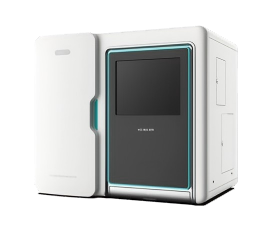
These systems use nephelometry or turbidimetry to quantify bacterial density in a suspension. The instrument compares the reading to a pre-set McFarland target and prompts the addition of more colonies or diluent until the desired turbidity is reached. This process eliminates subjective visual matching and reduces the risk of under- or over-inoculation. Once the suspension is standardized, many instruments can automatically inoculate AST panels or plates, dispensing precise volumes into each well or onto agar surfaces. This level of control minimizes well-to-well variation and improves the reproducibility of MIC endpoints.
Manual vs Automated Inoculation: Key Differences
The following table contrasts manual and automated approaches to inoculum preparation and AST inoculation.
| Factor | Manual Method | Automated System |
|---|---|---|
| Inoculum standardization | Visual comparison to McFarland standard; operator-dependent | Instrument measures turbidity and guides adjustment to exact target |
| Inoculation precision | Pipetting volumes manually calibrated; risk of error | Automated dispensing with controlled volume and pattern |
| Reproducibility | Varies between technicians and days | High consistency, independent of operator |
| Time per sample | Several minutes of hands-on time per isolate | Reduced hands-on time; batch processing possible |
| Documentation | Manual recording of McFarland values | Automatic logging and traceability |
| Error potential | Risk of transcription, dilution, and pipetting errors | Lower error rates through automation and prompts |
Workflow Benefits Beyond Accuracy
Adopting an automatic bacterial suspension system also streamlines laboratory workflow. By automating repetitive tasks, technologists can focus on more complex analyses and verification steps. Batch processing capabilities allow simultaneous standardization of multiple isolates, improving turnaround time. Integrated systems may interface with laboratory information systems (LIS), automatically transferring data and reducing manual entry errors. For laboratories with increasing test volumes, automation helps maintain throughput without compromising quality.
Choosing an Automated System for Your Laboratory
When evaluating automatic bacterial suspension systems, consider these key features:
- McFarland range and accuracy: Ensure the system can measure turbidity across the required range (e.g., 0.5–4.0 McFarland) with documented precision.
- Compatibility: Check whether the instrument works with common AST platforms, plate formats, and tube types used in your lab.
- Throughput: Assess how many samples can be processed per run or per hour.
- Ease of use: Look for intuitive software, clear prompts, and minimal maintenance.
- Data connectivity: Integration with LIS or middleware can reduce manual steps and improve traceability.
- Compliance: The system should support accreditation requirements, such as those from the College of American Pathologists (CAP) or ISO 15189, by providing audit trails and QC logs.
Common Pitfalls in Manual Inoculation
Laboratories that rely solely on manual methods may encounter several issues that automation helps avoid:
- Inconsistent colony selection: Technicians may pick different-sized colonies, leading to varying initial inoculum.
- Subjective turbidity matching: Variations in lighting, background, and visual acuity affect McFarland estimation.
- Time-dependent growth: Delays between suspension preparation and inoculation can allow bacterial growth, altering the effective inoculum.
- Pipetting errors: Inaccurate volume dispensing may cause well-to-well inconsistency in MIC panels.
- Transcription mistakes: Manually recording McFarland readings can introduce data entry errors.
These pitfalls underscore why an automatic bacterial suspension system is more than a convenience—it is a quality-assurance tool that directly impacts clinical reporting.
The Link to Reliable AST Interpretation
When inoculum density is precisely controlled, AST results become more reliable. Consistent bacterial loads ensure that growth control wells meet acceptance criteria and that MIC values are reproducible across runs. This reduces the need for repeat testing and gives clinicians greater confidence in the reported susceptibility profile. In turn, hospitals can improve antibiotic stewardship, tailoring narrow-spectrum therapy based on accurate data.
Final Takeaway
An automatic bacterial suspension system is a cornerstone of modern clinical microbiology. By standardizing inoculum preparation and automating dispensing, it reduces variability, enhances workflow efficiency, and strengthens the reliability of AST results. For laboratories seeking to improve quality and handle growing test volumes, automation in the pre-analytical phase is a practical investment that pays off in more accurate and timely patient care.
For system-level planning, our Laboratory Equipment Solution page can help buyers connect equipment selection with real hospital or laboratory workflows. Related equipment pages include Fully Automatic Bacterial Suspension Inoculation and Antimicrobial Susceptibility Interpretation System and Automatic Bacterial Suspension Inoculation and Dispensing Instrument.