
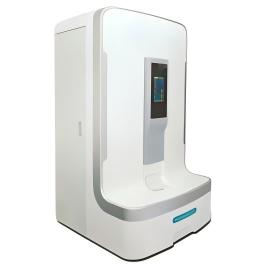
Microbial Mass Spectrometry Rapid Identification System
Product Introduction The Microbial Mass Spectrometry Rapid Identification System is a laboratory instrument based on MALDI-TOF mass spectrometry, also known as Matrix-Assisted Laser Desorption/Ionization Time-of-Flight Mass Spectrometry. It is designed for the rapid identification of bacteria, fungi, yeasts, filamentous fungi, mycobacteria, and other microorganisms. Compared with traditional microbial identification methods, this system offers high sensitivity,…
Request a QuoteProduct Introduction
The Microbial Mass Spectrometry Rapid Identification System is a laboratory instrument based on MALDI-TOF mass spectrometry, also known as Matrix-Assisted Laser Desorption/Ionization Time-of-Flight Mass Spectrometry. It is designed for the rapid identification of bacteria, fungi, yeasts, filamentous fungi, mycobacteria, and other microorganisms.
Compared with traditional microbial identification methods, this system offers high sensitivity, high specificity, high accuracy, high throughput, automation, and low testing cost per sample. By collecting microbial protein fingerprint spectra and comparing them with reference spectra in the database, the system can quickly identify microorganisms at the species level.
It is widely suitable for clinical laboratories, food and agricultural product testing, disease control centers, inspection and quarantine laboratories, environmental monitoring, biological industries, agriculture, forestry, animal husbandry, and fishery-related testing applications.
Working Principle
The system works based on the comparison of microbial protein fingerprint spectra.
After sample pretreatment, the microbial sample is placed onto a target plate and mixed with a suitable matrix solution. Under laser irradiation, microbial protein molecules are desorbed and ionized. The generated ions enter the time-of-flight mass analyzer, where they are separated according to their mass-to-charge ratio.
The system collects the characteristic protein fingerprint spectrum of the sample and compares it with standard spectra in the microbial database. Based on the matching result, the software automatically provides microbial identification information.
This method is especially suitable for laboratories that need fast, routine, and high-throughput microbial identification.
Main Applications
The Microbial Mass Spectrometry Rapid Identification System can be used in multiple laboratory scenarios, including:
- Clinical microbiology laboratories
- Hospital laboratory departments
- Disease control and prevention centers
- Food safety testing laboratories
- Agricultural product testing institutions
- Inspection and quarantine laboratories
- Environmental microbiology laboratories
- Biological industry quality control laboratories
- Universities, research institutes, and third-party testing laboratories
It can be used for the rapid identification of bacteria, yeasts, filamentous fungi, mycobacteria, and some difficult or rare microorganisms.
Technical Specifications
| Item | Specification |
|---|---|
| Product Name | Microbial Mass Spectrometry Rapid Identification System |
| Model | HD-MD1000 |
| Technology | MALDI-TOF Mass Spectrometry |
| Identification Principle | Microbial protein fingerprint spectrum comparison |
| Main Use | Rapid identification of bacteria and fungi |
| Mass Range | 1–500 kDa |
| Resolution for Bombesin | m/z = 1619, ≥7000 FWHM |
| Resolution for ACTH 18-39 | m/z = 2465, ≥7000 FWHM |
| Resolution for Angiotensin II | m/z = 1046, ≥7000 FWHM |
| Protein Resolution | m/z = 16952, ≥5000 FWHM |
| Matrix HCCA Resolution | ≥2500 FWHM |
| Mass Stability | Relative mass-to-charge deviation ≤3×10^-4 within 8 hours, approx. 300 ppm |
| Flight Tube Length | 1 m |
| Laser | Nitrogen laser, adjustable laser energy |
| Laser Lifetime | More than 100 million shots |
| Target Plate | 96-spot reusable stainless steel split target plate |
| Database Coverage | More than 600 genera, 4,000 species, and 20,000 strains |
| Fungal Database | More than 2,600 fungal strains, including over 1,000 filamentous fungal strains |
| Mycobacteria Database | More than 1,200 mycobacterial strains |
| Application Fields | Medical and healthcare, food/agricultural products, chemical industry, biological industry, agriculture, forestry, animal husbandry, and fishery |
| Origin Category | China-made |
| Price Range | RMB 1,000,000–2,000,000, depending on configuration |
Core Components
The system is composed of the mass spectrometry main unit, target plate loading system, ion source, laser, vacuum system, mass analyzer, software platform, microbial database, reagents, and consumables.
Target Plate Loading System
The target plate loading system adopts an automatic sealed chamber door design. The entire loading process can be completed automatically without manual operation, helping reduce operating errors and improve workflow stability.
Integrated Ion Source
The system uses an integrated ion source design, which reduces the need for frequent ion source cleaning and improves instrument operating efficiency.
Nitrogen Laser
The instrument is equipped with a nitrogen laser. The laser energy is adjustable to meet different sample detection requirements. The laser lifetime is more than 100 million shots, making it suitable for long-term and high-frequency laboratory use.
Built-in Vacuum System
Both the low vacuum pump and high vacuum pump are built into the instrument. No external pump trailing system is required, making the system more compact and easier to install in laboratory environments.
Time-of-Flight Mass Analyzer
The system uses a 1-meter flight tube to support stable acquisition of microbial protein fingerprint spectra.
Anaerobic Monitoring Module
The system can be equipped with wireless oxygen concentration monitoring. It can monitor oxygen concentration changes during the culture process in real time and can also monitor temperature and humidity. Monitoring data can be automatically generated into charts for result analysis, storage, and export. The sensor thickness is less than 20 mm.
System Software
The software platform supports sample information entry, data import, data export, spectrum acquisition, result analysis, and report generation.
The software can integrate antimicrobial susceptibility testing results to generate a complete microbial identification and drug susceptibility test report. It can also upload results to a LIS system according to laboratory information management requirements.
The computer software can monitor hardware status in real time, including vacuum system, platform, laser, high-voltage system, acquisition card, and power supply. It also supports control, warning, and error reporting functions. The LCD screen on the main unit can display hardware operation status in real time.
Microbial Database
The database covers common microorganisms in clinical, food, disease control, inspection and quarantine, environmental, marine, and other testing fields. It also includes some difficult and rare microorganisms to meet the needs of different laboratories.
The database includes:
- More than 600 microbial genera
- More than 4,000 microbial species
- More than 20,000 microbial strains
- More than 2,600 fungal strains
- More than 1,000 filamentous fungal strains
- More than 1,200 mycobacterial strains
A broad and specialized database helps improve identification coverage and provides strong support for clinical diagnosis, food safety control, environmental monitoring, and scientific research.
Detection Process
The general testing workflow includes:
- Sample collection and culture
- Target colony selection
- Sample pretreatment
- Spotting the sample onto the stainless steel target plate
- Adding the appropriate matrix solution
- Loading the target plate into the mass spectrometer
- Laser desorption and ionization
- Protein fingerprint spectrum acquisition
- Automatic database comparison
- Identification result and report output
For different bacteria or fungi, the system can be used with corresponding sample pretreatment reagents to improve testing consistency.
Reagents and Consumables
The system provides sample pretreatment reagents suitable for different bacterial processing requirements. These reagents help standardize sample preparation and improve the stability of test results.
The target plate is a 96-spot reusable stainless steel split target plate. Compared with disposable consumables, reusable target plates help reduce long-term operating costs, especially for laboratories with high sample throughput.
Quality Control
The system uses Escherichia coli ATCC 8739 for quality calibration, helping laboratories maintain stable and reliable identification performance.
Through standard strain quality control, hardware status monitoring, software warning functions, and database comparison, the system provides reliable quality management support for daily microbial identification work.
Applicable Departments
This system is suitable for:
- Clinical microbiology departments
- Hospital laboratory departments
- Infection-related laboratories
- Disease control microbiology laboratories
- Food safety testing laboratories
- Agricultural product quality testing laboratories
- Biosafety laboratories
- Research laboratories
- Third-party testing laboratories
Applicable Medical and Testing Institutions
The Microbial Mass Spectrometry Rapid Identification System is suitable for hospitals, disease control centers, food testing institutions, inspection and quarantine organizations, research institutes, third-party testing laboratories, and large biological industry laboratories.
For laboratories with large sample volumes, complex microorganism types, and high requirements for speed and accuracy, this system can significantly improve microbial identification efficiency, reduce manual workload, and accelerate report output.
Product Advantages
Fast Identification
Based on MALDI-TOF mass spectrometry technology, the system can rapidly identify microorganisms by analyzing microbial protein fingerprint spectra.
High Throughput
The 96-spot reusable target plate supports batch sample testing and helps improve routine laboratory testing capacity.
Low Operating Cost
Reusable target plates and an automated workflow help reduce consumable costs and labor costs over long-term operation.
Broad Database Coverage
The database covers common microorganisms from clinical, food, disease control, environmental, marine, and other fields, as well as some difficult and rare strains.
High Automation
Sample data management, spectrum acquisition, result analysis, report generation, and hardware monitoring can be completed through the software system.
LIS Compatibility
The software can integrate antimicrobial susceptibility testing results and upload reports to a LIS system, supporting digital laboratory management.
Installation Requirements
Before installation, the laboratory should reserve a suitable space with stable power supply, proper ventilation, controlled temperature and humidity, and a clean operating environment.
Because the system includes a mass spectrometry main unit, vacuum system, laser module, and software platform, installation, commissioning, and operator training should be completed by professional engineers.
The laboratory should also prepare sample pretreatment, culture, spotting, and data analysis areas according to the actual testing workflow.
Maintenance Requirements
Routine maintenance mainly includes target plate cleaning, reagent management, database maintenance, quality control calibration, software data backup, vacuum system inspection, and hardware status monitoring.
The integrated ion source design helps reduce the frequency of ion source cleaning and lowers maintenance workload. Operators should perform regular quality control tests according to the equipment operation requirements to ensure long-term stable performance.
Packaging and Export
Before delivery, the equipment can be packed with shockproof, moisture-proof, and safety protection materials to ensure safe transportation of the mass spectrometry main unit, target plates, accessories, reagents, consumables, and software materials.
For export projects, configuration plans, installation guidance, operation training, technical documents, and after-sales support can be provided according to customer requirements.
Customization Service
Different laboratories may have different requirements for sample types, database coverage, software interfaces, report formats, and pretreatment methods.
The system can be configured according to different application fields, including medical testing, food and agricultural product testing, disease control, inspection and quarantine, research, and biological industry quality control.
FAQ
1. What microorganisms can this system identify?
It can identify bacteria, fungi, yeasts, filamentous fungi, mycobacteria, and some difficult or rare microorganisms.
2. What is the main advantage of MALDI-TOF technology?
MALDI-TOF technology provides rapid identification, high accuracy, high throughput, automation, and low cost per test compared with many traditional microbial identification methods.
3. Can the system integrate antimicrobial susceptibility testing results?
Yes. The software can integrate antimicrobial susceptibility testing results and generate a complete microbial identification and susceptibility report.
4. Can the target plate be reused?
Yes. The system uses a 96-spot reusable stainless steel split target plate, helping reduce long-term consumable costs.
5. What does the database include?
The database includes more than 600 genera, 4,000 species, and 20,000 strains, covering clinical, food, disease control, inspection and quarantine, environmental, marine, and other microorganisms.
6. Is the system suitable for hospital laboratories?
Yes. It is suitable for clinical microbiology laboratories, hospital laboratory departments, disease control centers, and third-party testing laboratories.
7. Can the product configuration be customized?
Yes. The system configuration, database, software interface, consumables, and sample pretreatment solution can be customized according to laboratory needs.
8. Are the specifications fixed?
Product appearance, structure, performance, and parameters may be updated due to continuous product improvement. Final specifications should be confirmed according to the latest configuration provided by the manufacturer.