
Automated Bacterial Suspension Dispensing for Higher Throughput Microbiology Labs
What Is Automated Bacterial Suspension Dispensing?
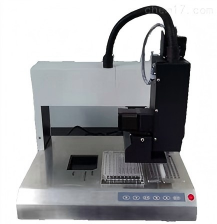
Automated bacterial suspension dispensing refers to the use of a dedicated instrument that prepares, adjusts, and dispenses standardized microbial suspensions directly into test panels, microtiter plates, or broth tubes. The instrument typically takes a primary sample colony, mixes it with a diluent, measures the turbidity against a pre‑calibrated target (e.g., 0.5 McFarland), and dispenses a precise volume. Some systems integrate with laboratory information systems (LIS) to record each inoculation step, removing the need for manual transcription. Instead of a technologist spending minutes per isolate adjusting turbidity by eye, a bacterial suspension dispensing instrument can process dozens of samples in a fraction of the time, with each suspension meeting a consistent density standard.
How Does a Bacterial Suspension Dispensing Instrument Work?
Although specific implementations differ among manufacturers, most instruments share a core sequence:
- Colony pick-up: A built‑in or attached probe selects a pure colony from an agar plate.
- Resuspension: The colony is mixed with a sterile saline or broth diluent.
- Turbidity measurement: A nephelometer or densitometer measures the optical density and adjusts the suspension to the target concentration.
- Dispensing: The calibrated suspension is dispensed in precise aliquots into microtiter wells, AST cards, or additional broth tubes.
- Documentation: The instrument logs the suspension density, time stamp, and operator ID, often linked directly to the LIS.
This closed‑loop process eliminates the manual steps of vortexing, adjusting, and checking against a turbidity standard, which are known sources of inter‑operator variability.
Throughput Gains: Automated vs. Manual Inoculum Preparation
The productivity difference is most clear when a lab handles 100 or more clinical isolates per day. The table below summarizes typical performance advantages:
| Parameter | Manual Method | Automated Dispensing Instrument |
|---|---|---|
| Hands‑on time per isolate | 2–4 minutes | 20–40 seconds |
| Turbidity consistency (CV) | 10–15% | 2–5% |
| Daily throughput (8 hr shift) | 100–200 isolates | 400–600 isolates |
| Error risk (mislabeling, dilution) | Moderate | Low (barcode‑guided) |
| Data traceability | Manual log | Electronic record |
These gains are most significant in reference laboratories, large hospital microbiology departments, and centralized testing facilities where batch processing is common. The instrument does not necessarily work faster per single step; it reduces the cumulative hands‑on time and the need for repeat testing caused by out‑of‑range suspensions.
Improving Reproducibility and Liquid Handling Accuracy
In antimicrobial susceptibility testing, small differences in inoculum density can shift minimum inhibitory concentration (MIC) results by a full dilution step. Automated bacterial suspension dispensing instruments use photometric feedback loops to maintain a tight coefficient of variation (CV). Many systems can hold a CV below 3% for the target McFarland value, a level difficult to achieve routinely by manual methods. This reproducibility supports compliance with CLSI and EUCAST guidelines, which stress the importance of standardized inoculum preparation for reliable AST results. For labs that report quantitative MICs, the reduction in random error helps avoid unnecessary repeat testing and improves overall workflow predictability.
Supporting Antimicrobial Susceptibility Testing (AST) Workflows
AST workflows often involve multiple broth microdilution panels, disk diffusion plates, or automated AST system cards. An automated dispensing instrument can serve as a shared inoculum preparation station that feeds multiple downstream platforms. Benefits include:
- Consistent inoculum across panels: The same calibrated suspension is dispensed into different test formats, reducing panel‑to‑panel variability.
- Faster batch preparation: A 96‑well plate can be inoculated in under two minutes, enabling high‑volume AST lab operations.
- Reduced manual pipetting fatigue: Repetitive pipetting steps are associated with both physical strain and occasional pipetting errors; automated dispensing removes this burden.
- Direct LIS integration: Many instruments can be linked to the LIS to automatically populate AST panel IDs, isolate numbers, and result fields, simplifying pre‑analytical tracking.
According to the Clinical Microbiology Procedures Handbook, “Inoculum standardization is critical for accurate susceptibility testing, and the use of nephelometric instruments improves reproducibility” (Section 5.14, 4th Edition). This principle underlies the value of automation in contemporary AST pipelines.
Key Considerations Before Purchasing a Bacterial Suspension Dispensing Instrument
When evaluating instruments for your lab, the decision goes beyond the purchase price. Consider the following checklist:
- Throughput requirement: Estimate the number of isolates processed daily and the expected growth over the next three years.
- Compatibility with existing AST systems and LIS: Verify that the instrument can export records in a format your LIS can parse (e.g., HL7, ASTM).
- Dispensing volume range and accuracy: Confirm that the minimum and maximum dispense volumes match your most common plate and tube requirements.
- Turbidity calibration method: Look for factory‑calibrated nephelometers with documented traceability to McFarland standards.
- Sample capacity and walk‑away time: Assess how many samples can be loaded in one run and whether the instrument can operate unattended during peak hours.
- Barcoding and sample tracking: Check if the instrument can read tube or plate barcodes to minimize clerical errors.
- Consumables and maintenance costs: Evaluate the cost per test for disposable tips, diluent, calibration standards, and service contracts.
- Footprint and lab space constraints: Ensure the system fits within the biosafety cabinet or bench layout required for your specimen flow.
- Vendor training and validation support: Confirm that the supplier offers on‑site installation, operational qualification (OQ), and performance qualification (PQ) documentation.
These points are intended to guide a multidisciplinary purchasing decision that includes laboratory directors, technical supervisors, and biomedical engineering staff.
Integrating Dispensing Instruments into Existing Lab Workflows
Automation does not require a complete work‑flow redesign. Many labs phase in dispensing instruments by first applying them to the highest‑volume sample types—such as urine cultures or blood culture isolates—and expanding to other specimen categories later. The instrument is typically placed at the inoculation bench, directly replacing the manual turbidity station. Staff training usually takes less than one day. To realize the full benefit, the lab should map the pre‑analytical steps: how colonies are sub‑cultured, how plates are labelled, and how results are recorded. A small pilot evaluation can help demonstrate the reduction in repeated AST setups and the improvement in first‑pass inoculation quality.
Maintenance and Validation in High‑Throughput Settings
Routine maintenance includes daily cleaning of the dispensing probe or nozzle, weekly checks of the turbidity calibration, and periodic verification with a certified McFarland standard. Many instruments include a self‑check protocol that can be run during idle periods. Validation for CLIA‑regulated labs typically involves a reproducibility study across multiple operators and a comparability study against manual suspension preparation. After initial operational qualification, ongoing quality control should follow the manufacturer’s recommendations and any internal lab protocol.
| Maintenance Task | Frequency | Purpose |
|---|---|---|
| Probe/nozzle cleaning | Daily | Prevent carryover and clogs |
| Turbidity check with standard | Weekly | Confirm calibration drift ≤ ±0.1 McF |
| Full system cleaning cycle | Monthly | Remove salt or protein buildup |
| Service contract preventive maintenance | Annually or per contract | Replace wear parts, recalibrate optics |
In high‑throughput environments where the instrument processes several hundred isolates daily, consistent preventive maintenance is essential to minimize unscheduled downtime. Labs should track maintenance logs electronically, ideally within the same LIS that records instrument performance.
Final Takeaway
A bacterial suspension dispensing instrument is more than a time‑saving device; it is a process‑standardization tool that directly affects the quality of susceptibility testing and the efficiency of high‑throughput microbiology. By reducing manual variability, enabling electronic traceability, and feeding multiple AST platforms with consistent inoculum, these systems help laboratories move from subjective adjustment to objective, auditable preparation. When procurement is guided by a clear understanding of throughput needs, compatibility, and total cost of ownership, the result is a sustainable improvement in both lab productivity and diagnostic reliability.
For system-level planning, our Laboratory Equipment Solution page can help buyers connect equipment selection with real hospital or laboratory workflows. Related equipment pages include Fully Automatic Bacterial Suspension Inoculation and Antimicrobial Susceptibility Interpretation System and Automatic Bacterial Suspension Inoculation and Dispensing Instrument.